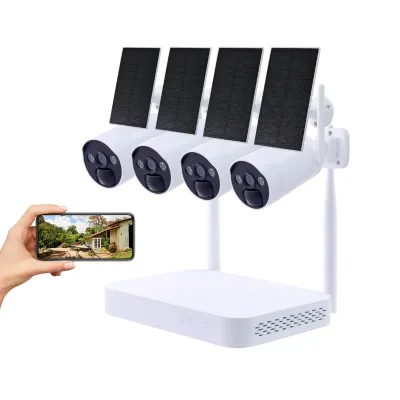
Source wireless cctv camera kit for home, business, and farm security
Explore 30 listings of wireless cctv camera kit options including off-grid solar systems and HD video cameras. Buyers can compare specifications like resolution, battery type, and protection levels to find suitable security solutions.
Key considerations
Products List


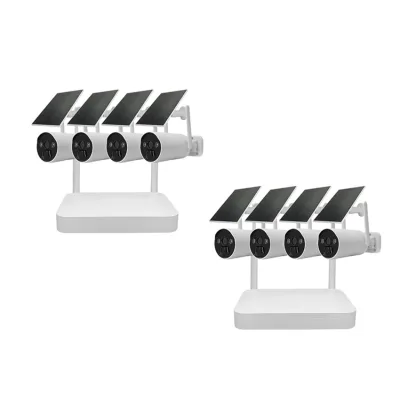


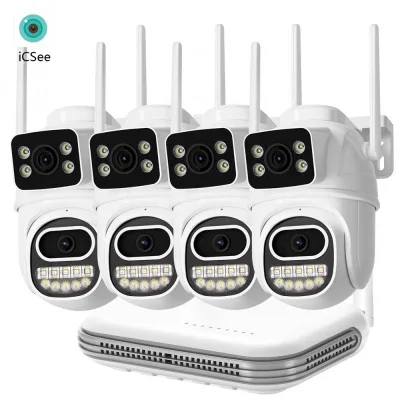
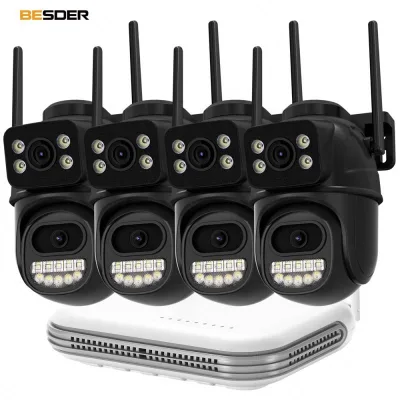
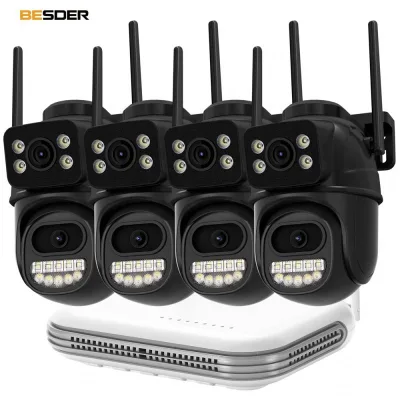



Comprehensive Sourcing Guide
Strategic Sourcing Guide for Wireless CCTV Camera Kits
The global demand for secure, scalable surveillance solutions has elevated the wireless CCTV camera kit to a critical asset for commercial and industrial procurement. Sourcing these systems requires a disciplined approach that distinguishes between marketing narratives and verifiable technical realities. Buyers must navigate a complex landscape of component compatibility, regulatory compliance, and environmental durability. This guide synthesizes observed market data and technical specifications to provide a framework for evaluating wireless CCTV solutions, ensuring that procurement decisions are grounded in factual evidence rather than unverified claims.
Technical Architecture and Component Specifications
A comprehensive wireless CCTV kit is not merely a collection of cameras; it is an integrated system where the sensor, transmission protocol, and power management must function in unison. When evaluating potential suppliers, the primary technical differentiator lies in the image sensor and resolution capabilities. Market observations indicate a prevalence of CMOS sensors in the 1/4 inch to 1/3 inch form factors. The 1/3 inch progressive scan sensor, for instance, offers superior low-light performance and motion capture compared to smaller sensors, which is a critical consideration for 24/7 monitoring applications.
Resolution remains a paramount specification. While some units in the current market offer 1280 x 960 resolution, higher-end configurations support 1920 x 1080 (Full HD) with a 16:9 aspect ratio. Buyers must verify that the claimed resolution aligns with the actual sensor size and processing capabilities. A 1/3 inch sensor paired with 1080p output generally ensures better detail retention than a smaller sensor attempting to achieve the same pixel count. Furthermore, the lens specification, such as a fixed 3.6mm focal length, dictates the field of view. Procurement teams should request optical charts to confirm that the lens matches the intended coverage area, whether it is a narrow corridor or a wide perimeter.
The "wireless" designation often implies specific transmission technologies. In the context of the observed product data, features like "Infrared Technology" suggest night vision capabilities, which are essential for continuous security. However, the effective range of these wireless links must be validated. While some product attributes mention an effective distance of 30 meters or more, this figure is highly dependent on environmental interference, antenna placement, and the specific radio frequency used. Buyers should not assume a universal range but rather demand site-specific signal testing data from the supplier before finalizing an order.
Compliance, Certification, and Regulatory Standards
In the B2B sector, compliance is not optional; it is a prerequisite for market entry and liability protection. The product data highlights a cluster of certifications that serve as indicators of manufacturing quality and safety. Commonly observed certifications include CE, ISO, RoHS, FCC, CCC, and EMI/EMC. The presence of these marks suggests adherence to European safety standards (CE), international quality management (ISO), and restrictions on hazardous substances (RoHS).
However, the mere presence of a certification logo on a product listing does not guarantee validity. Buyers must verify that the specific model number, such as the SF-FK01 or BA-NK series, is covered under the cited certificate. For instance, while some listings mention TUV and IEC standards alongside CE and RoHS, the scope of these certifications must be confirmed. The EMI/EMC certification is particularly relevant for wireless devices, as it ensures the equipment does not emit excessive electromagnetic interference that could disrupt other sensitive electronics on the premises.
Furthermore, environmental protection ratings are critical for outdoor installations. The observed data points to IP65 and IP67 protection levels. An IP65 rating indicates protection against water jets, suitable for general outdoor use, while IP67 suggests temporary immersion capabilities. Procurement teams must match the protection rating to the specific installation environment. A camera rated IP65 should not be installed in a location prone to flooding or heavy submersion without additional housing. Similarly, the "Vandal-proof" and "Waterproof / Weatherproof" attributes require physical verification of the housing materials and sealing integrity, as these claims are often subject to rigorous testing protocols that vary by manufacturer.
Cost Drivers and Pricing Dynamics
Understanding the cost structure of wireless CCTV kits is essential for budgeting and value analysis. The observed price range in the market spans from $10 to $20,000, a variance that reflects significant differences in system complexity, component quality, and scale. Low-cost units, often priced near the lower end of this spectrum, typically feature basic CMOS sensors, limited resolution, and standard plastic housings. These are suitable for small-scale residential or light commercial use where high-definition detail is not the primary requirement.
Conversely, systems approaching the upper end of the price range often include advanced features such as intelligent controllers, higher-efficiency solar integration, and robust battery backups. The inclusion of "Intelligent Controllers" and "IGBT" technology in solar-powered variants adds significant value by improving energy efficiency and system reliability. These high-end kits may also feature "Easy Upgrade" capabilities, allowing for modular expansion without replacing the entire system.
Packaging and logistics also influence the final cost. The data indicates options for "Carton or Wood Boxes" and "Neutral Packing." Wood boxes are generally more expensive but offer superior protection for heavy or sensitive equipment during international shipping. Buyers should factor in the total landed cost, including packaging, rather than focusing solely on the unit price. Additionally, the Minimum Order Quantity (MOQ) ranges from 1 to 50 units. Suppliers with lower MOQs may charge a premium per unit, while bulk orders often benefit from economies of scale. It is crucial to balance the immediate budget constraints with the long-term cost of ownership, including maintenance and potential replacement costs.
Typical Applications and System Integration
The versatility of wireless CCTV kits allows for deployment across a wide array of sectors. The observed "Off-Grid system" capabilities and solar power compatibility make these solutions ideal for remote locations where grid power is unreliable or unavailable. Systems with "Overloads, Low Voltage and Under Voltage (Alarm)" protection are particularly valuable in agricultural, mining, or construction sites where power fluctuations are common. The "Solar Power Generator Protection" features ensure that the surveillance system remains operational even during power outages, provided the solar array and battery bank are correctly sized.
For commercial applications, the "Bullet Camera" style and "High Definition" features are preferred for perimeter security. The "Auto BLC" (Backlight Compensation) feature is a key technical specification for cameras facing bright light sources, such as direct sunlight or streetlights, ensuring that subjects in shadow remain visible. The "Mini Size" attribute of certain models allows for discreet installation in retail environments or office spaces where aesthetics are a concern.
Integration with existing infrastructure is another critical consideration. The "Connection Drawing Provided" attribute indicates that suppliers should offer clear wiring diagrams to facilitate installation. However, buyers must verify that the wireless protocols are compatible with their existing network infrastructure. While some systems claim a 30-meter effective distance, the actual performance in a complex building with thick walls or metal interference may be significantly lower. Procurement teams should plan for potential signal repeaters or wired backhaul solutions to ensure reliable data transmission.
Supplier Evaluation and Quality Assurance
Selecting a reliable supplier is as important as selecting the right product. The product origin data points to manufacturers based in Zhejiang and China, regions known for their electronics manufacturing capabilities. However, geographic origin alone does not guarantee quality. Buyers should evaluate suppliers based on their ability to provide consistent product specifications, adherence to delivery timelines, and responsiveness to technical inquiries.
The "Delivery Period" of 7-15 days after payment receipt is a standard benchmark observed in the market. Deviations from this timeline can indicate production bottlenecks or logistical issues. Suppliers who consistently meet or exceed these lead times demonstrate operational efficiency. Additionally, the "Standard" product classification suggests that these items are mass-produced with established quality control processes. Buyers should request evidence of these processes, such as ISO 9001 audit reports, to ensure that the supplier maintains rigorous manufacturing standards.
Quality assurance should also extend to the testing of critical components. For solar-integrated systems, verifying the "Module Efficiency" of 18.5% and the "PV Array Combiner" IP65 rating is essential. Buyers should ask for test reports that validate these specifications under real-world conditions. Similarly, for the camera units, requesting sample footage or live demonstrations can help verify the claimed "High Definition" and "Infrared" performance.
Long-Term Procurement and Maintenance Considerations
Sourcing wireless CCTV kits is a long-term investment that requires planning for maintenance and scalability. The "Easy Upgrade Solar Power System" feature is a significant advantage, allowing buyers to expand capacity without replacing the entire unit. However, the "Lead-Acid AGM" battery type, while common, has a limited lifespan compared to newer lithium-ion technologies. Procurement teams should factor in the replacement cycle of these batteries, which typically requires periodic maintenance and eventual replacement.
The "System" attribute of being "Off-Grid" implies a reliance on local energy generation. Buyers must ensure that the "Allowable Max Loads Power" of 100W to 1500W is sufficient for the intended load, including the cameras, recorders, and any additional sensors. Overloading the system can lead to premature failure of the inverter or battery bank. Regular monitoring of the system's performance is necessary to detect issues such as voltage drops or inefficient charging.
Finally, the "Remote Control" attribute, noted as "Without Remote Control" in some listings, suggests that these systems may rely on software interfaces or physical buttons for operation. Buyers should verify the availability of mobile apps or web-based management tools that allow for remote access and configuration. The absence of a physical remote control is not necessarily a drawback if the software interface is robust, but it is a feature that must be confirmed during the evaluation process. By focusing on these long-term considerations, buyers can ensure that their wireless CCTV investment remains secure, reliable, and cost-effective for years to come.
Comparative Analysis of Key Specifications
To assist in the decision-making process, the following table summarizes the key technical specifications observed in the market, highlighting the variations that buyers should consider when comparing different models.
| Specification Category | Observed Range / Common Values | Procurement Verification Point |
|---|---|---|
| Sensor Type | CMOS (1/4 inch, 1/3 inch) | Verify sensor size against resolution claims. |
| Resolution | 1280 x 960 to 1920 x 1080 | Confirm pixel count matches field of view needs. |
| Protection Rating | IP65, IP67 | Match rating to installation environment (indoor/outdoor). |
| Power System | Off-Grid, Solar (100W-1500W) | Validate solar array efficiency and battery capacity. |
| Certifications | CE, ISO, RoHS, FCC, CCC | Check certificate scope for specific model numbers. |
| Lens Focal Length | 3.6mm (Fixed) | Calculate field of view based on mounting distance. |
| Night Vision | Infrared Technology | Test low-light performance in actual conditions. |
| Delivery Lead Time | 7-15 Days | Confirm timeline against project schedule. |
| Packaging | Carton, Wood Box, Neutral | Assess shipping requirements and protection level. |
This comparative overview underscores the importance of detailed specification verification. By systematically evaluating each parameter against the specific requirements of the deployment site, buyers can mitigate risks and select a wireless CCTV kit that delivers optimal performance and reliability.
FAQs
What certifications do the wireless CCTV kits have?
The kits typically hold CE, ISO, RoHS, FCC, and CCC certifications. Some models also include TUV IEC and EMI/EMC marks to ensure compliance with international safety and electromagnetic standards for reliable operation.
Can these systems operate without grid power?
Yes, the kits are designed as off-grid systems with solar power generator protection. They feature intelligent controllers and lead-acid AGM batteries to manage overloads and voltage issues for continuous monitoring in remote areas.
What is the maximum power load for these solar systems?
The allowable max loads power range from 100W to 1500W depending on the specific configuration. Buyers must ensure their connected devices stay within this limit to prevent system failure or battery depletion during operation.
How long does delivery take after payment?
The standard delivery period is 7 to 15 days after receiving payment. This timeline applies to orders originating from Zhejiang, China, and may vary slightly based on the specific packaging requirements like wood boxes or cartons.
Which resolution options are available for the cameras?
Available resolutions include 1920 x 1080 for Full HD and 1280 x 960 for standard definition. These are supported by 1/3 inch progressive scan sensors or 1/4 inch CMOS sensors to ensure clear image capture in various lighting conditions.
What is the minimum order quantity for these kits?
The minimum order quantity ranges from 1 to 50 units depending on the supplier. Lower MOQs allow for smaller initial purchases, while larger orders may benefit from economies of scale in pricing and shipping logistics.